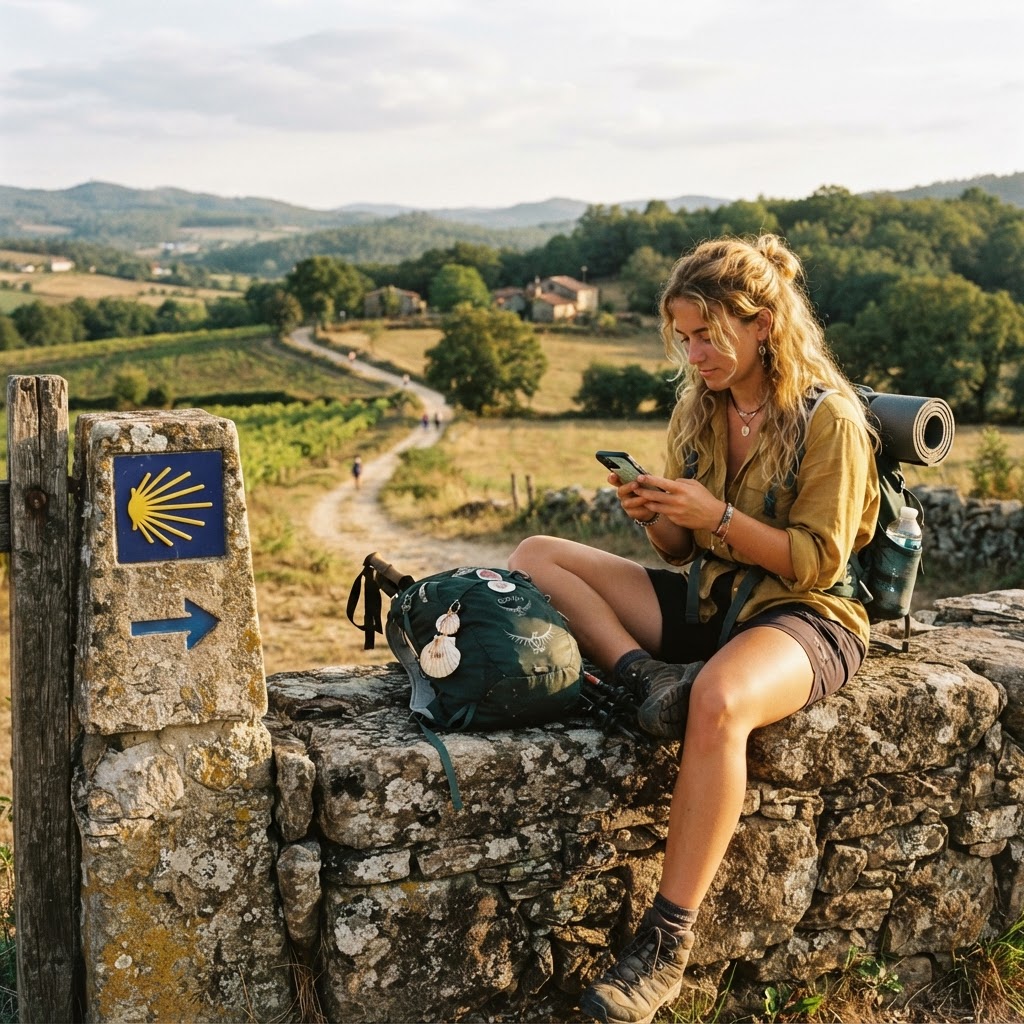
The Solo Camino Walk alone, never lonely.
Roughly half of everyone on the Camino sets off alone, and most finish with a trail family. Here is what walking it alone actually looks like — how safe it is, what it costs, where the awkward moments are, and how to meet people without trying.
What walking alone really feels like
Alone is the default
You are not the odd one out. Most pilgrims start solo; the shared dorm and the communal dinner do the introductions for you, usually within the first evening.
You set the pace
Walk 18 km because your knee says so, or 32 because the light is beautiful. No group to keep up with, no one waiting at the top of the hill.
You are never really off-grid
On the main routes there is a village every 5–10 km, phone signal most of the day, and other pilgrims within sight. Navigation is yellow arrows, not bushwhacking.
Day three is the turning point
The first evenings feel strange — you eat early and sleep too much. By day three you have a rhythm, a few faces you recognise, and the whole thing clicks.
Is the Camino safe for solo walkers?
Yes — the Camino is one of the safest long-distance walks in the world. Thousands of people, many of them women, walk it alone every year. The real risks are blisters and overdoing day one, not crime. These are the habits that keep it that way:
Watch the cities, not the trail
Petty theft happens in Pamplona, Burgos, León, Logroño and Santiago — a phone on a café table, a bag left in a church porch. The trail itself is quiet.
Use the locker, split your money
Albergues have lockers; use them. Carry cards separately from cash and never leave your passport in your pack at the bar.
Send one message a morning
Text someone at home the town you are aiming for. On the Francés and Portugués there is signal most of the day, and every town has a bar you can ask in.
Know 112
Spain's emergency number works from any phone, SIM or not, and operators speak English. Save it before you fly.
Don't walk the last hour in the dark
Plan to arrive before sunset. If you are running late, stop at the next village instead of pushing on with a headtorch on a road shoulder.
Book the first night only
Knowing where you sleep on arrival removes the one genuinely stressful moment. After that, walk-ins are normal outside July and August.
For women walking alone
Thousands of women walk the Camino solo every year and it is widely reported as one of the most comfortable solo walking environments anywhere. The practical notes: albergue dorms are mixed but respectful and usually quiet by 22:00; a bottom bunk near the door is fine; private rooms cost €30–50 where you want one; and the pilgrim community looks out for each other in a way that is hard to explain until you are in it. The one honest caveat is leaving big cities at dawn — take the lit exit and walk with someone you met at breakfast.
What a solo Camino costs
Walking alone is cheap, because albergue beds are priced per person — there is no single supplement on a dorm bunk. Budget €25–35 a day for albergues, a pilgrim menu and coffees. If you want a private room every night, plan €45–65 a day. Packing light matters more when you carry everything yourself, and baggage transfer is per bag, not per person, if you ever want it.
Which route suits a solo first Camino?
Camino Francés
Busiest and best-serviced — easiest place to meet people, and the classic first solo route.
Camino Portugués
From Porto: shorter, flatter, still social, less crowded than the Francés in shoulder season.
Camino Inglés
About 75 km in 3 days from Ferrol — the shortest route that earns the Compostela, ideal for a solo test run.
Camino Primitivo
Quieter and harder. Beautiful, but you may walk whole afternoons alone — better with some Camino miles behind you.
Walk Companion — your solo safety net
Open the map on your phone, press start, and see yourself moving along your planned stage in real time: next town, distance left, where you sleep tonight. It is the reassurance of knowing exactly where you are — free, in the browser, no app install, no account.
Try Walk CompanionSolo Camino: quick answers
Is it safe to walk the Camino de Santiago alone?+
Yes. The Camino is one of the safest long-distance walks in the world: constant pilgrim traffic on main routes, a village every 5–10 km, and a community that looks after each other. The realistic risks are blisters, sun and doing too much on day one. Use albergue lockers in big cities and keep an eye on your phone in Pamplona, León and Santiago.
Will I be lonely walking the Camino alone?+
Almost never for long. Most pilgrims start alone, and the dorm and communal dinner make introductions automatic. You will typically have a small group of familiar faces by day three. You can also choose to walk alone in the mornings and socialise in the evenings — that mix is what most solo pilgrims end up doing.
Is the Camino safe for a woman walking alone?+
Yes — thousands of women walk it solo every year, and it is widely described as one of the most comfortable solo walking environments anywhere. Dorms are mixed but respectful, private rooms are available in most towns for €30–50, and the community is protective. The one thing worth planning is leaving large cities before dawn: take the lit route and walk with someone from breakfast.
How much does a solo Camino cost?+
€25–35 a day if you sleep in albergues: €8–15 for a bunk, €10–12 for a pilgrim menu, plus coffees. There is no single supplement on a dorm bed, which is why solo walking is the cheap way to do the Camino. Budget €45–65 a day if you want a private room every night.
Which Camino route is best if you are walking alone?+
The Camino Francés for a first solo Camino — busiest, best-serviced and easiest for meeting people. The Camino Portugués from Porto is a quieter, flatter alternative, and the Camino Inglés from Ferrol (about 75 km) is the shortest route that still earns the Compostela. The Primitivo and Norte are beautiful but much quieter, so you may walk long stretches alone.
How do I meet people on a solo Camino?+
Stay in albergues rather than private rooms, eat the communal dinner, stop at the same morning café, and walk the first hour with whoever is leaving at the same time. The Camino does the rest — by day three you will be recognised by name in the next village.
Do I need to book accommodation in advance as a solo walker?+
Book your first night before you arrive so the start is calm, then walk in. Outside July and August, beds are generally available and municipal albergues do not take reservations anyway. In high season, book the day before from a town page — your dates are pre-filled.
Ready to walk it alone?
A free day-by-day itinerary, live tracking so you always know where you are, and beds you can book as you go.
Plan my solo Camino freeWe use cookies to improve your experience and analyze site traffic. By clicking Accept, you consent to the use of cookies. Privacy Policy