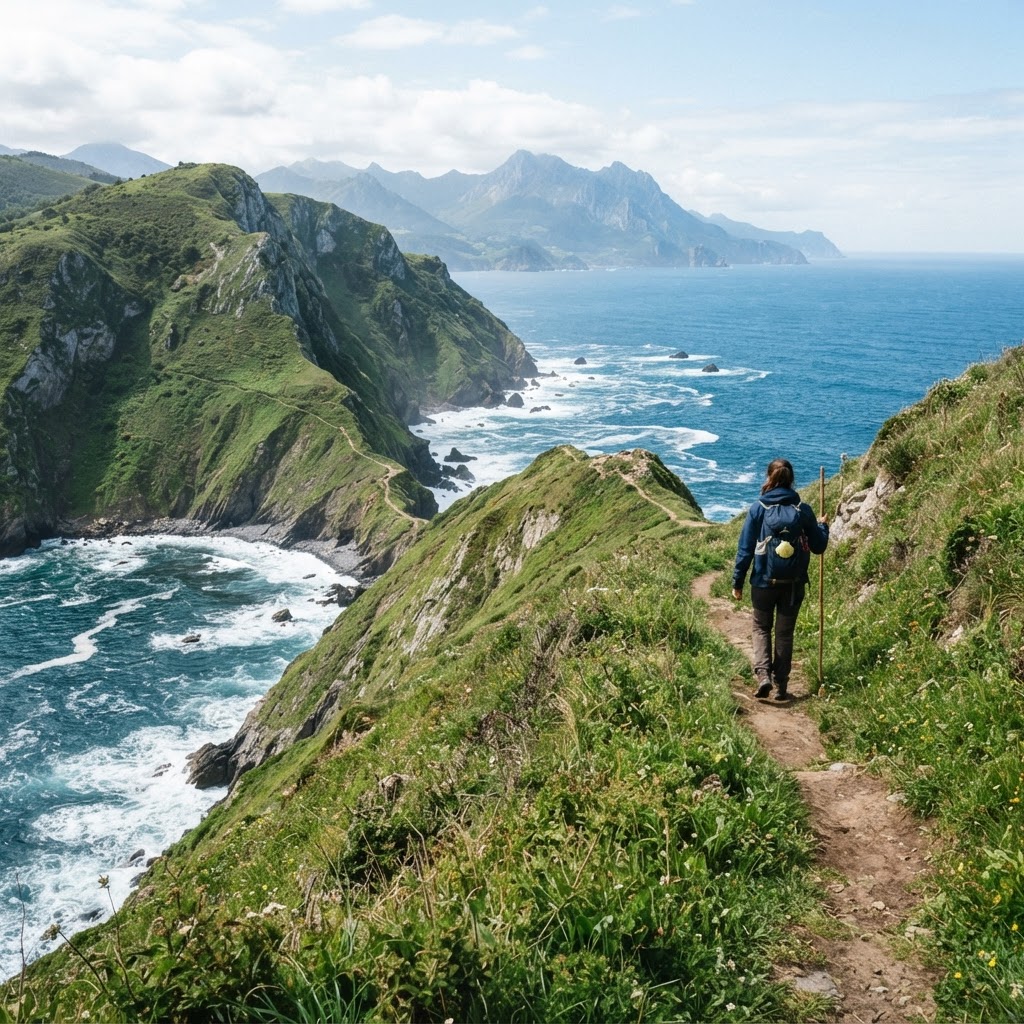
The Camino del Norte is a breathtaking pilgrimage that traces Spain's dramatic northern coastline from Irún to Santiago de Compostela. Spanning approximately 820 kilometers, this "coastal Camino" offers a rugged alternative to the more popular Camino Francés, rewarding walkers with endless ocean views and quiet, green landscapes.
The Character of the Northern Way
The Northern Way is widely regarded as one of the most scenic paths among all Camino routes. Unlike the meseta of the interior, this route is defined by the Cantabrian Sea, lush forests, and steep cliffs. Because of its challenging topography and less developed infrastructure compared to central routes, the difficulty of the Camino del Norte is generally considered higher, requiring pilgrims to be prepared for constant ascents and descents.
Who Should Walk the Camino del Norte?
This route is best suited for experienced walkers who enjoy solitude and nature. If you prefer smaller crowds and want to immerse yourself in the authentic atmosphere of the Basque Country, Cantabria, Asturias, and Galicia, this is the perfect journey for you. It is a path for those who seek to disconnect from the modern world while keeping the refreshing spray of the Atlantic within sight.
Preparing for Your Journey
Spanning roughly 35 days, the trek requires careful preparation. You will encounter varying weather conditions, so checking our gear & packing tips is essential. Here is what you should consider:
- Build up your physical fitness for hilly terrain.
- Familiarize yourself with the stages of the Camino del Norte.
- Consider taking the detour toward Oviedo to join the Primitivo route for a mountain finish.
- Pack high-quality, broken-in footwear to handle both road and trail surfaces.
FAQ
How difficult is the Camino del Norte?
The route is physically demanding due to frequent elevation changes and rugged coastal paths. It is significantly more strenuous than the flatter sections of the Camino Francés.
Is the Northern Way well-marked?
Yes, the route is marked with the traditional yellow arrows and scallop shell symbols. While generally well-signposted, we recommend using a digital guide or map to ensure you stay on track.
What is the best time of year to walk?
Late spring and early autumn are ideal, as you will avoid the intense summer heat and the busiest holiday periods. June and September offer the best balance of stable weather and fewer crowds.
Whether you are a seasoned pilgrim or looking for your next big adventure, the Northern Way is an unforgettable experience. For more inspiration, browse our Camino blog or getting started resources. When you are ready to organize your pilgrimage, you can Plan your Camino.
Explore the route
Camino del Norte
Explore this part of the camino
Plan your Camino
A complete guide to the Camino del Norte (Northern Way): route, stages, difficulty, coastal scenery, and who this rugged, beautiful path suits best.