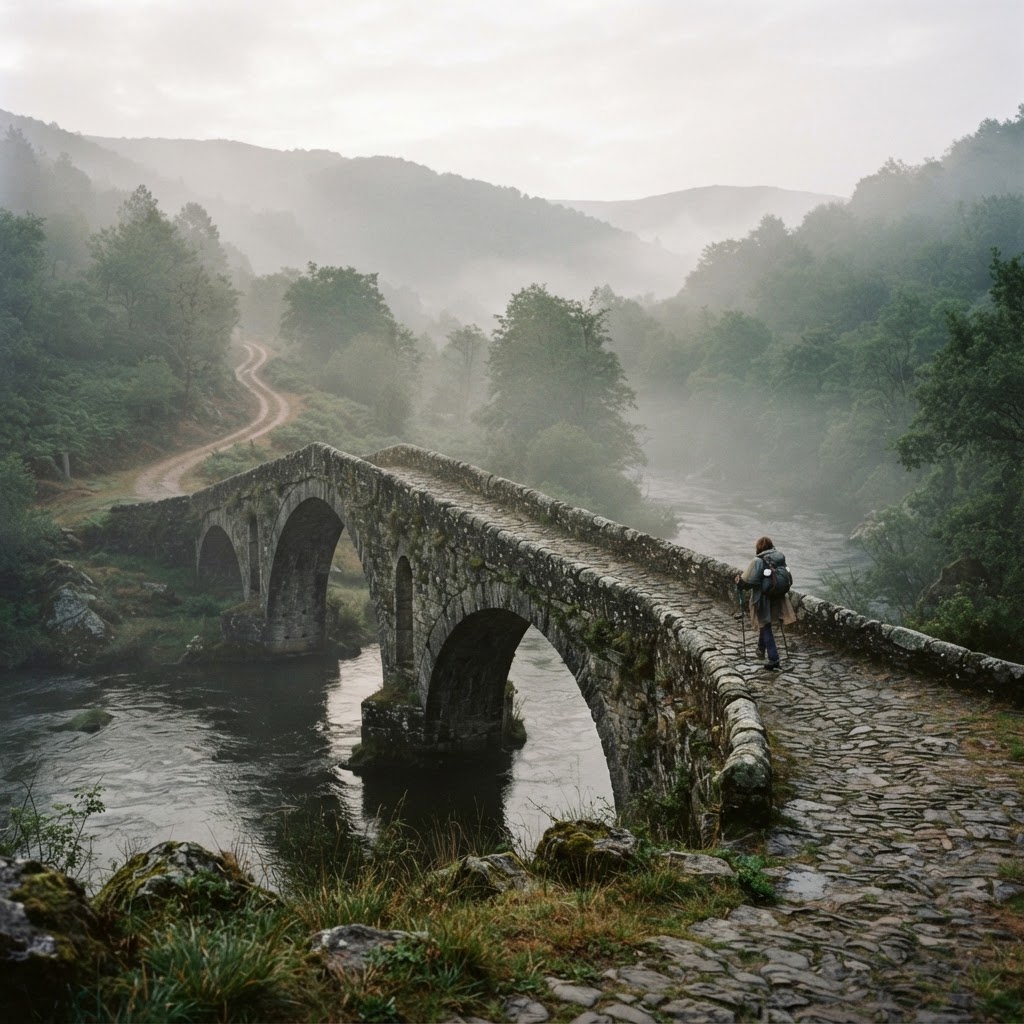
The Camino de Santiago is one of the oldest pilgrimage routes in Christendom — walked for over a thousand years. Its history is the story of a tomb, a king, a saint, and the millions of pilgrims who have followed the stars west to the edge of Europe.
The discovery of the tomb
In the early 9th century, a hermit named Pelayo reported seeing stars over a hillside in Galicia. The local bishop investigated and discovered a marble coffin — believed to be the remains of the apostle St. James the Greater (Santiago), brought from Jerusalem. King Alfonso II of Asturias made the first pilgrimage from Oviedo and ordered the first church built on the spot.
The medieval boom
By the 11th and 12th centuries, Santiago was one of the three great pilgrimage destinations of medieval Europe (with Rome and Jerusalem). Popes granted indulgences to pilgrims, and the Camino Francés became a well-trodden road across northern Spain, lined with hospitals, bridges, and monasteries built to serve pilgrims.
Decline and revival
The Reformation, plague, and political turmoil emptied the Camino in the 16th–18th centuries. The rediscovery of St. James' relics in 1879 and papal recognition revived interest. The modern revival began in the 1980s — today over 300,000 pilgrims arrive in Santiago each year.
FAQ
Who was St. James?
James the Greater was one of Jesus' twelve apostles, a Galilean fisherman martyred in Jerusalem in 44 AD. His remains, tradition says, were brought by boat to Galicia.
Why "Santiago"?
Santiago is Spanish for "Saint James" (Sanctus Iacobus → Sant Iago). Compostela comes from "campus stellae" — field of the star.
How old is the Camino?
The pilgrimage is over 1,200 years old — the first recorded royal pilgrimage was in 834 AD.
Plan your Camino
Walk a thousand years of history. Browse all Camino routes and plan your Camino.
Explore all Camino routes
Camino de Santiago
Plan your Camino
From a 9th-century tomb to a million pilgrims a year: the history of the Camino de Santiago, the discovery of St. James' relics, medieval pilgrimage, decline, and modern revival.